
Top articles
- Wear-Resistant Ceramic Tiles: Industrial Wear Protection Solution
- New Benchmark in Impact Resistance and Wear Protection:Three-in-One Ceramic Vulcanized Liners
- Wear-Resistant Ceramic Liners for Cyclone Separators
- What is a wear-resistant ceramic composite pipe?
- Performance Advantages and Application Fields of Alumina Ceramic Tubes
- Wear-Resistant Alumina Ceramic Liner Plate: Technical Specifications and Application Overview
- Wear-Resistant Alumina Hexagonal Ceramic Liner Tiles: A Reliable Choice for Industrial Wear Protection
- Wear-Resistant Alumina Ceramic Lining Bricks: A High-hardness, Long-Life Grinding Solution
- Alumina Ceramic Grinding Balls: High-Purity, Wear-Resistant Grinding Media
- Visit Us at UGOL ROSSII & MINING 2026 – Booth 1-D22
Latest articles
- Wear-Resistant Ceramic Tiles: Industrial Wear Protection Solution
- New Benchmark in Impact Resistance and Wear Protection:Three-in-One Ceramic Vulcanized Liners
- Wear-Resistant Ceramic Liners for Cyclone Separators
- What is a wear-resistant ceramic composite pipe?
- Performance Advantages and Application Fields of Alumina Ceramic Tubes
- Wear-Resistant Alumina Ceramic Liner Plate: Technical Specifications and Application Overview
- Wear-Resistant Alumina Hexagonal Ceramic Liner Tiles: A Reliable Choice for Industrial Wear Protection
- Wear-Resistant Alumina Ceramic Lining Bricks: A High-hardness, Long-Life Grinding Solution
- Alumina Ceramic Grinding Balls: High-Purity, Wear-Resistant Grinding Media
- Visit Us at UGOL ROSSII & MINING 2026 – Booth 1-D22
Your browsing history

Introduction of Sintered Silicon Carbide Ceramics
Silicon carbide ceramics can be divided into recrystallized silicon carbide ceramics, reactive sintered silicon carbide ceramics, pressureless sintered silicon carbide ceramics, hot-pressed sintered silicon carbide ceramics, and high-temperature hot isostatic pressing sintered silicon carbide ceramics according to the sintering process. The carbonization properties made by different processes are also very different.
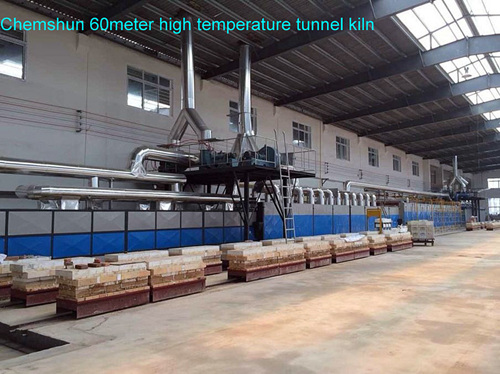
The process flow of activated sintered silicon carbide is to first mix carbon source with silicon carbide powder, prepare green body by grouting, dry pressing or cold isostatic pressing, and then carry out silicon infiltration reaction, that is, green body under vacuum or inert atmosphere. When the green body is heated to above 1500°C, the solid silicon melts into liquid silicon, which penetrates into the green body containing pores through capillary action. Liquid silicon or silicon vapor reacts chemically with C in the green body, and the in-situ generated β-SiC combines with the original SiC particles in the green body to form a reactive sintered silicon carbide ceramic material.
The key to the performance of reaction sintered silicon carbide mainly lies in the size and type of carbon source, the particle size of the silicon carbide raw material, the porosity of the green body, the sintering temperature and the holding time and other factors. The advantages of reactive sintered silicon carbide are low sintering temperature, low production cost and high degree of material densification. In particular, there is almost no volume shrinkage during reaction sintering. It is especially suitable for the preparation of large-scale and complex-shaped structural parts. Chemshun Ceramics manufacturer can provide silicon carbide wear resistant ceramics in various shapes, such as seal ring , grinding barrel, bulletproof tiles, cyclone pipe .